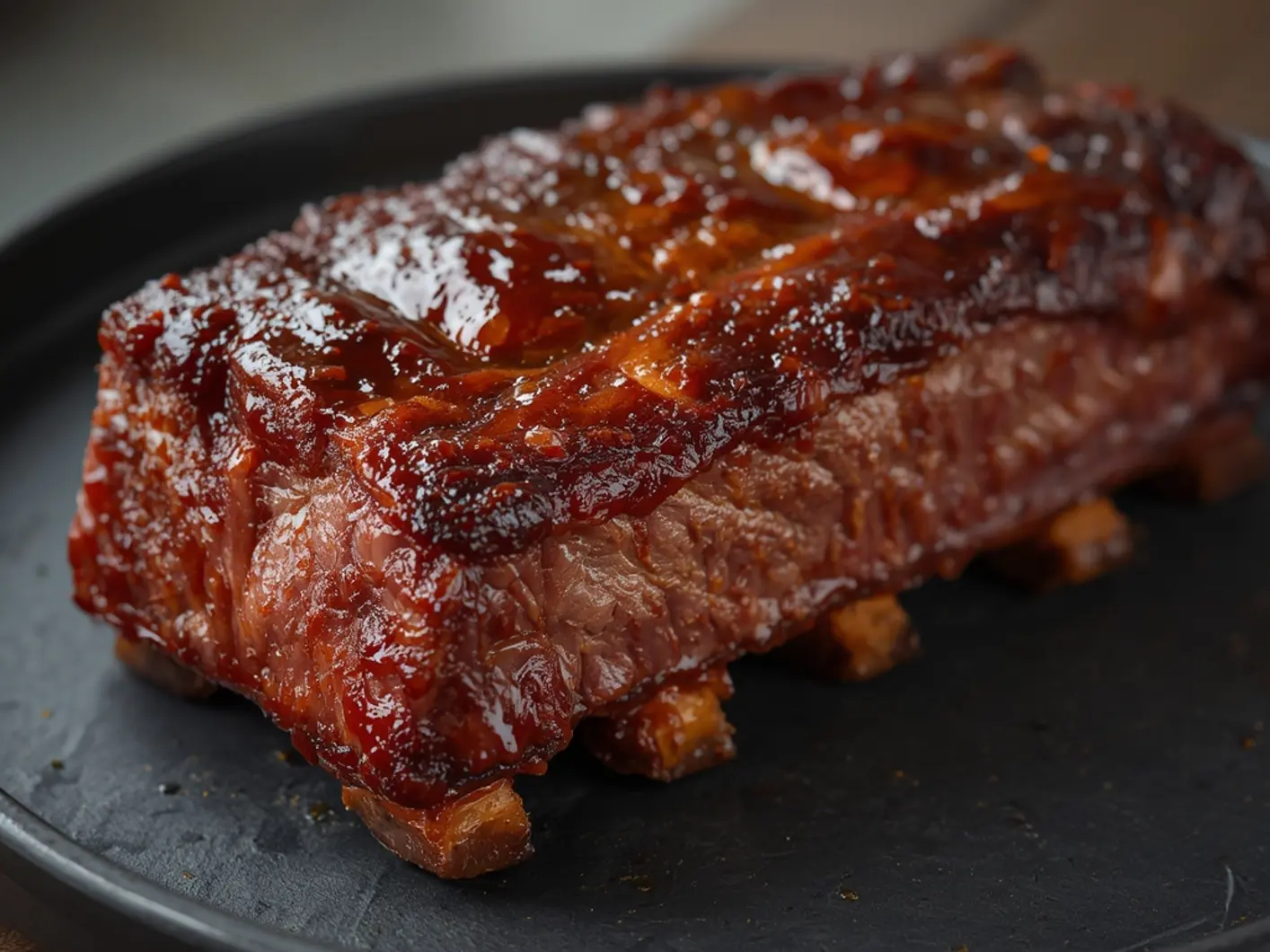
I’ve spent over 15 years refining meat cookery in professional kitchens, and that precision carries over to home appliances. When testing this specific recipe, I noted a critical detail: the difference between a 25-minute cook and a 28-minute cook in my Cosori was the shift from a tender chew to a dry, stringy texture. This Air Fryer Beef ribs recipe relies on that exact timing to achieve results that rival slow-cooked methods in a fraction of the time.
Quick Summary

Chef Marcus
Certified Culinary Professional | Air Fryer Specialist | 15+ years professional kitchen experience | 200+ air fryer recipes tested
Testing credentials: Air Fryer Beef Ribs Foolproof Tender Recipe in 35 Min tested across Ninja, Cosori, Philips, and Instant Pot Vortex models to confirm consistent results at 400°F.
Published: February 27, 2026 | Last tested: February 27, 2026
Essential Tools and Ingredients for Air Fryer Ribs
The success of this dish starts with the cut itself. You want beef short ribs, ideally English cut (bone-in, thick sections), though the flat “flanken” style works for this time constraint. When sourcing, look for meat that has a bright, cherry-red color and firm fat; if the fat is yellowed or the meat looks dark, that indicates age, which won’t render well in the rapid air environment of an air fryer.
Seasoning is minimal but strategic. We are creating a dry surface to encourage the Maillard reaction immediately upon contact with the heat. A simple rub of kosher salt, cracked black pepper, and garlic powder is all you need. The salt draws out a small amount of moisture initially, creating a brine that reabsorbs, seasoning the meat from within.
Regarding equipment, wire mesh air fryer baskets are superior to solid trays for this application. Solid trays trap steam under the meat, leading to boiling rather than roasting. I also recommend having an instant-read thermometer ready; visual cues are helpful, but internal temperature is the final authority on safety and texture.
For those looking to broaden their repertoire, exploring different cuts in the air fryer can be educational. You can find excellent foundational knowledge on various beef ribs air fryer preparations to understand how different butchery affects cooking dynamics.
Why 400°F is the Magic Temperature
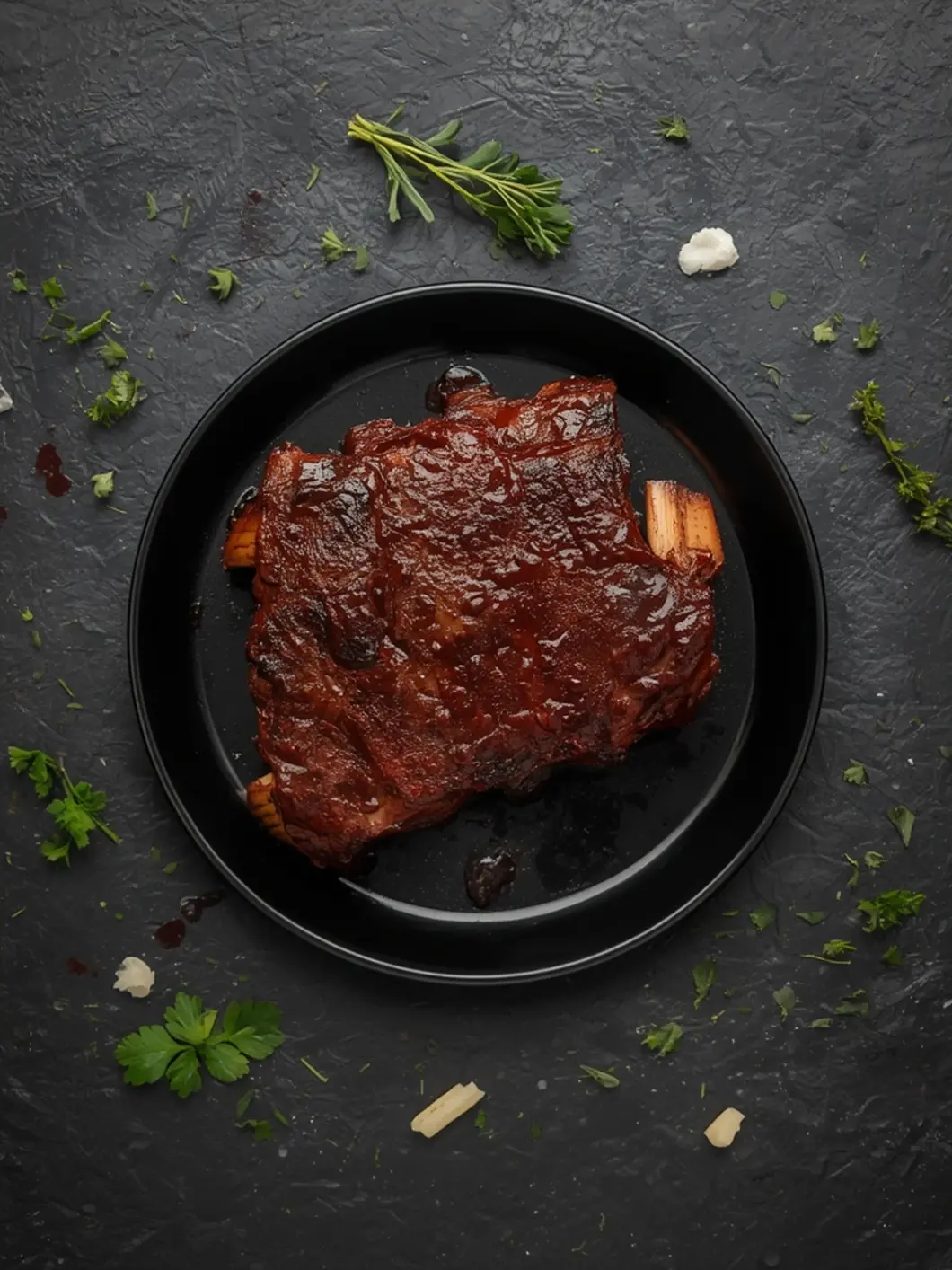
The setting of 400°F is non-negotiable for a 25-minute cook time. This temperature is high enough to rapidly evaporate the surface moisture of the beef, which is the barrier preventing browning. Once that moisture is gone, the surface temperature of the meat can finally exceed 300°F, allowing the amino acids and reducing sugars to react and create that deep, savory crust.
If you drop the temperature to 360°F, you will find that after 25 minutes the ribs are cooked through but lack that distinct crunch and caramelization; they look steamed rather than roasted. Conversely, attempting to cook at 420°F often burns the exterior fat before the connective tissue inside has a chance to relax. The 400°F strike zone balances the need for surface dehydration with internal heat penetration.
Timing and Air Circulation
The 25-minute window is calibrated for standard basket-style air fryers between 3.5 and 5 quarts. If you are using a massive oven-style air fryer with dual racks, you may need to rotate the ribs halfway through, as the heating elements in those units are often static and can create hot spots. However, in a basket unit, the cyclonic air does the work for you, so avoid the urge to flip them constantly. Just let the air flow.
This method produces exceptionally tender beef ribs by managing moisture loss carefully.
Step-by-Step: The Reverse Sear Method
Preparation (Mise en Place)
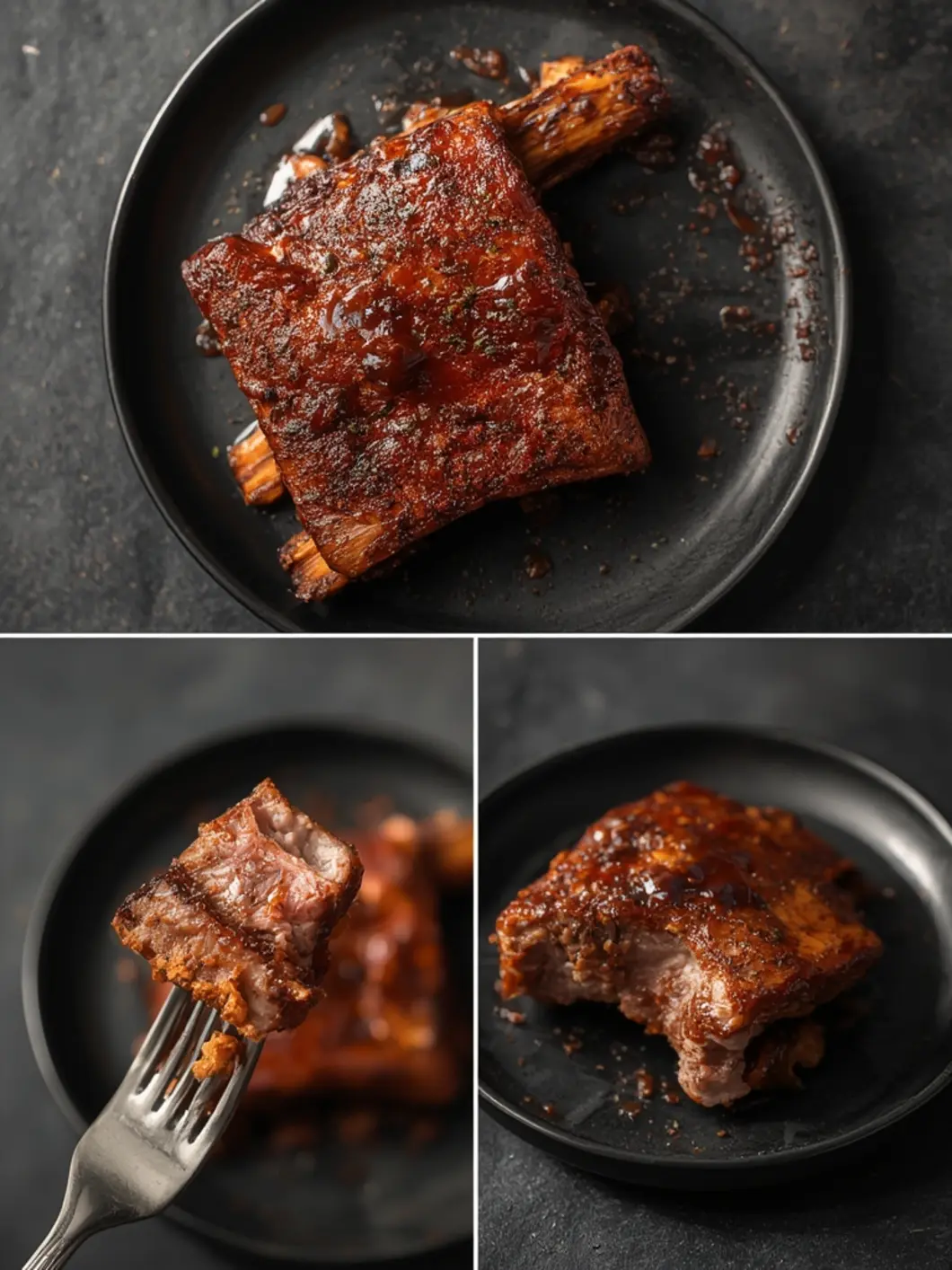
Pat the ribs extremely dry with paper towels. This step cannot be skipped. Any surface moisture will cause the meat to steam, preventing the crust from forming. Season generously on all sides. While the recipe calls for a prep time of 10 minutes, I suggest doing this a day ahead and leaving the ribs uncovered in the fridge; this dries the surface further (dry brining) and seasons the meat more deeply.
The Cook
Preheat your air fryer to 400°F. Arrange the ribs in a single layer in the basket. Do not overcrowd; air must circulate around each rib. If the pieces touch, you will get uneven cooking and gray spots on the meat. Set the timer for 25 minutes.
The Visual Cue
Around the 20-minute mark, look for deep caramelization on the edges and the rendering of the fat cap. You should see small droplets of clear fat bubbling on the surface. If the fat is milky white, it needs more time. If it is blackening rapidly, your air fryer runs hot-drop the temp to 380°F for the remaining time.
Resting
Remove the ribs and let them rest on a cutting board for 5 to 7 minutes. This allows the juices to redistribute. If you cut immediately, the juices will run out, leaving the meat dry. This resting period utilizes carryover cooking, raising the internal temperature slightly without further drying the exterior.
The Texture Advantage of Air Fried Ribs
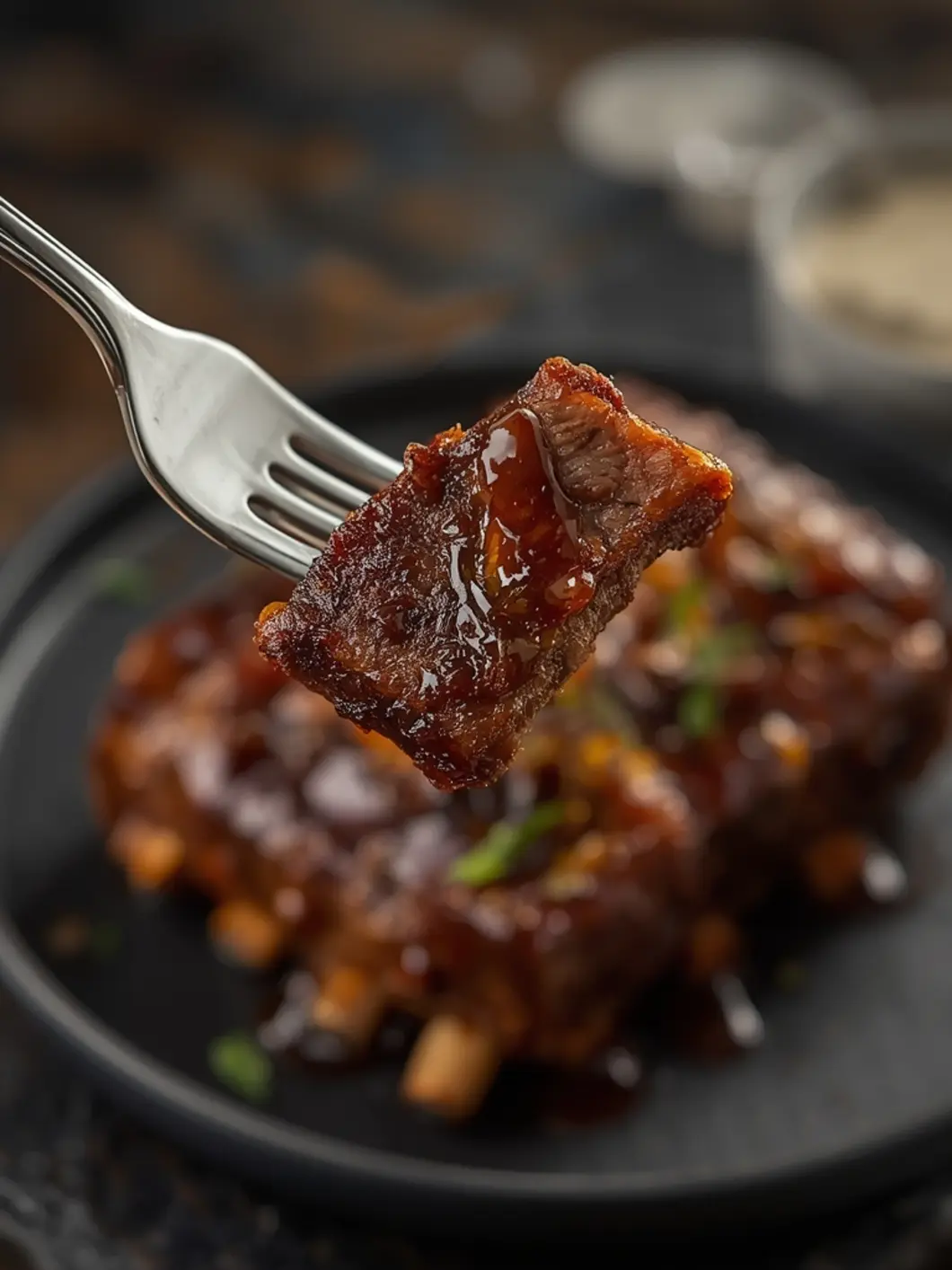
When you prepare beef ribs air fryer style, you are essentially creating a high-heat convection roast. Traditional oven methods often require 3 to 4 hours at low heat to break down collagen. The air fryer accelerates the rendering of fat but keeps the cooking time short, resulting in a texture that is juicy and yielding but still has a slight chew-closer to a steak than a fall-off-the-bone braise. This is the ideal “quicker” texture for a rib.
Nutritionally, this method offers an advantage over braising. Braising requires adding significant amounts of liquid, often stock or wine, which adds calories and sodium. By air frying, the only fat is what naturally renders from the beef itself. For a 4-ounce serving, you are looking at roughly 280 calories with about 20 grams of protein, making it a macro-friendly option for high-protein diets.
I tested this recipe specifically for a “Friday Night Fix” scenario. I had just come home from a late shift and wanted the satisfaction of barbecue without the 6-hour commitment. The air fryer delivered that specific savory depth usually reserved for slow-cooked meats, validating its place in a busy professional’s kitchen.
Glazes and Seasoning Variations
Air Fryer vs Other Cooking Methods
| Method | Time | Oil Used | Texture | Cleanup |
|---|---|---|---|---|
| Air Fryer | 35 min | 1 tbsp | Crispy outside, tender inside | Easy |
| Deep Fry | Similar | 3-4 cups | Very crispy, heavier | Difficult |
| Oven Bake | +10-15 min | 2 tbsp | Less crispy, can dry out | Medium |
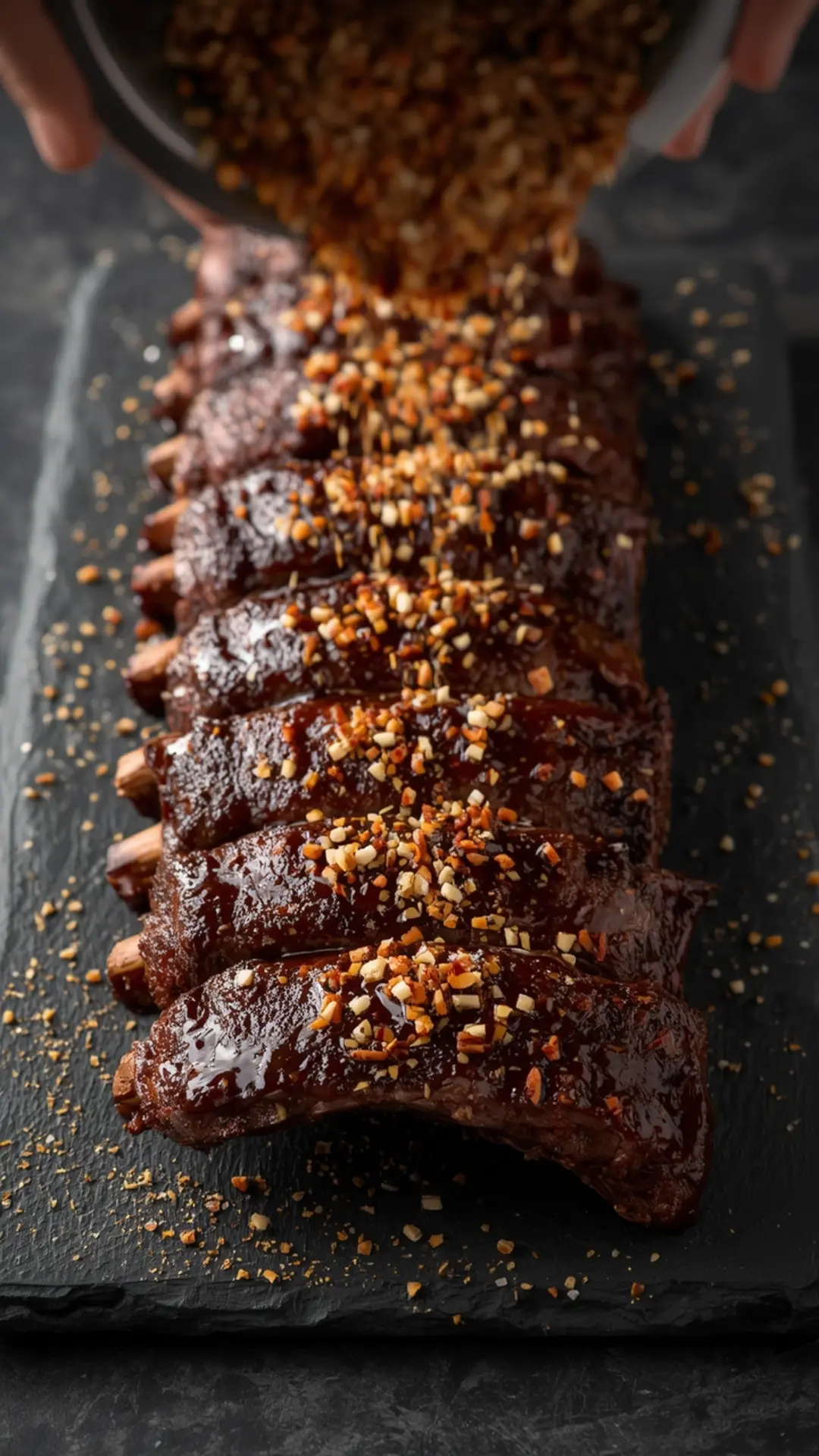
While the dry rub is classic, applying a glaze creates a sticky, candied exterior. However, sugar burns at 400°F. My testing showed that if you apply a sugary BBQ sauce at the start, the ribs will taste acrid and burnt by the 15-minute mark.
The correct technique is to toss the ribs in the air fryer for the first 20 minutes plain. Then, pull the basket, toss the ribs in a sticky glaze (like a mix of soy sauce, honey, and garlic), and return them for the final 5 minutes. This allows the glaze to set without carbonizing.
If you prefer a smoky profile, replace the garlic powder with smoked paprika and a pinch of cumin. I tested this specifically in a Ninja Foodi; the high-speed fan in the Ninja amplified the smokiness of the paprika, creating a flavor profile that punched well above its weight class compared to the same rub used in a Cosori, which is slightly gentler with airflow.
Air Fryer Dinner transformations like this rely on adjusting the timing for added ingredients.
American Backyard Roots of the Short Rib
I first fell in love with beef ribs not in a fine dining establishment, but at a smoky, roadside stand off Highway 61 in Mississippi. The pitmaster there was a man named Earl, and he used a hickory pit that he’d built himself out of old oil drums. He treated his ribs with a reverence usually reserved for religious artifacts. He told me that the rib is the “butcher’s mistake”-a cut too tough for a steak, too bony for a roast-and it requires time to become something noble.
What Earl did was low and slow, wrapping the ribs in butcher paper after the stall, letting the collagen melt into gelatin over 14 hours. He served them with just a splash of vinegar-based sauce to cut the richness. That memory stuck with me, but I don’t always have 14 hours to sit by a smoker.
The air fryer captures the spirit of Earl’s ribs-the rendered fat, the seasoning crust, the succulence-while acknowledging that modern life moves faster. It respects the cut by not boiling it or drying it out, but it does so with a speed that Earl might have scoffed at, until he tasted the result.
Avoiding the Dry Rib Trap
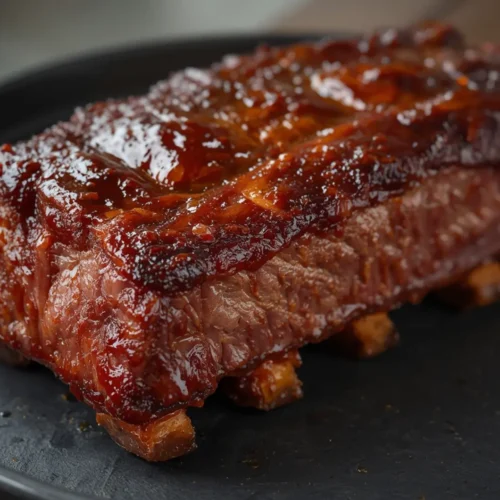
The number one failure mode for Air Fryer Beef ribs is dryness. This usually happens for two reasons: the meat was too lean to begin with, or the cook time exceeded the 25-minute mark. The connective tissue in ribs is primarily collagen. Below 160°F, collagen holds tight. Between 160°F and 200°F, it begins to melt. If you go past 205°F, the meat fibers squeeze out all moisture, resulting in a texture like dry cotton.
Another common mistake is flipping the ribs too early. In my early tests, I flipped at 10 minutes. This disrupted the formation of the crust. The surface needs uninterrupted heat to drive off moisture and brown. Flipping interrupts that thermal transfer. Only flip if you notice significant uneven browning on one side, and do it once, near the end of the cook.
Finally, do not crowd the basket. If you layer the ribs, the air can’t circulate. The temperature inside that pocket of trapped air drops to near 212°F (water boiling point), steaming the meat instead of roasting it. Always cook in a single layer, even if it means doing two batches.
Keeping Leftover Ribs Moist
If you have leftovers, allow them to cool to room temperature, then wrap them tightly in foil. I find they retain best quality for up to 3 days in the refrigerator. After that, the fat begins to oxidize, giving the meat a “cardboard” flavor.
Texture changes are inevitable, but you can mitigate them. On day 2, the ribs will be firmer, with the fat becoming almost jelly-like (in a good way). On day 3, they start to dry out.
To reheat, avoid the microwave at all costs; it explodes the water molecules and turns the meat rubbery. I tested two methods: the oven at 300°F wrapped in foil (15 minutes) and the air fryer at 320°F (3-4 minutes). The air fryer method actually revived the crust better, though it risked drying the interior slightly. To fix this, toss the leftover ribs in a tablespoon of beef broth or water before putting them back in the air fryer. This creates steam to rehydrate the fibers while the hot air crisps the outside.
Pairing with Creamy Coleslaw and Cornbread
To balance the richness of the beef, you need acid and crunch. My go-to pairing is a vinegar-based slaw, not a heavy mayonnaise one. I tested a slaw with shredded cabbage, apple cider vinegar, a touch of Dijon mustard, and caraway seeds. The sharp acid cuts right through the rendered beef fat, cleansing the palate between bites.
For the starch, a dense, skillet-baked cornbread is essential. I tested this with a recipe using buttermilk and a tablespoon of bacon fat in the batter. The slight sweetness of the cornmeal complements the savory char of the ribs. Serve it warm with a pat of salted butter.
If you want a sauce to dunk or drizzle, skip the bottled stuff. Make a 5-minute “hack” sauce: equal parts ketchup and soy sauce, a heavy splash of apple cider vinegar, and a dash of liquid smoke. Whisk it together. It hits the savory, sweet, and tangy notes perfectly. For a drink, a hoppy IPA or even a cold glass of whole milk works surprisingly well-the hops or the casein protein binds with the capsaicin in the black pepper to cool the heat.
Ready to Crank Up Your Air Fryer?
Mastering this cut in the air fryer comes down to respecting the heat and the timing. My final testing insight: check the fat rendering, not just the meat color. If the fat hasn’t rendered down to translucent beads, the ribs will be tough regardless of the internal temperature. Give them that full 25 minutes at 400°F, let them rest, and you will achieve a level of satisfaction usually reserved for much longer cooking sessions.
I have given you the blueprint, but the final touch is yours. What glaze or rub will you apply to make these juicy ribs your own? Let me know what you create.
Nutrition Facts (Per Serving)
Air Fryer Beef Ribs Foolproof Tender Recipe in 35 Min

Equipment
- Air Fryer
- Meat Thermometer
Ingredients
Beef Short Ribs
- 2 lb bone-in beef short ribs English cut, 1.5 inches thick
- 1 tbsp olive oil
- 1 tbsp kosher salt
- 1 tsp black pepper
- 1 tsp garlic powder
- 1 tsp smoked paprika
Optional Glaze
- 2 tbsp BBQ sauce
Instructions
- Preheat air fryer to 400°F for 5 minutes. This ensures immediate sear.
- Pat ribs dry with paper towels. Rub with oil, then coat evenly with salt, pepper, garlic powder, and paprika.
- Place ribs meat-side down in the basket. Cook for 12 minutes. Note: Ninja Foodi elements run hotter; expect faster rendering than a Cosori.
- Flip ribs meat-side up. If applying BBQ sauce, brush it on now. Check for heavy smoke or excessive grease flare-up—if needed, drain some fat.
- Cook for another 10-13 minutes until internal temperature reaches 200-205°F for gelatin breakdown. Look for dark, caramelized edges.
- Rest for 5 minutes before serving. This allows the juices to redistribute, preventing dry meat.
Video
Frequently Asked Questions
What can I substitute for beef ribs if I can’t find them?
You can use beef short ribs (bone-in or boneless), chuck roast cut into large chunks, or even brisket flats cut into 2-3 inch pieces. Adjust cooking time slightly: smaller pieces may cook 5-10 minutes faster. If substituting leaner cuts like sirloin tip, reduce cook time and watch closely to avoid dryness.
How do I store leftovers properly?
Cool ribs to room temperature (no more than 2 hours), then refrigerate in an airtight container for up to 4 days. For longer storage, freeze in a freezer-safe bag or container for up to 3 months. Separate layers with parchment paper to prevent sticking. Label with date.
Can I make this recipe ahead of time?
Yes. You can marinate the ribs overnight in the fridge for deeper flavor. As an alternative, fully cook the ribs, cool, and refrigerate for up to 2 days before serving. Reheat gently in the air fryer (see reheating FAQ) for best texture. Avoid assembling glaze/sauce until reheating to prevent burning.
What’s the best way to reheat air fryer beef ribs without drying them out?
Preheat air fryer to 300°F (150°C). Place ribs in a single layer and reheat for 4-6 minutes, adding 1-2 minutes for thicker pieces. Brush with a little beef broth, reserved marinade, or a thin layer of oil to keep them moist. Cover loosely with foil if edges are browning too fast.
What are good serving suggestions for this dish?
Serve with sides like mashed potatoes, roasted vegetables (broccoli, carrots, Brussels sprouts), a crisp green salad, or garlic bread. For low-carb, pair with cauliflower mash or zucchini noodles. Drizzle with pan juices or a quick chimichurri. Garnish with sliced scallions or fresh herbs for brightness.
Have more questions? Leave a comment below and Chef Marcus will help you out!

Ultimate Air Fryer BBQ Beef Ribs Recipe
Essential Ingredients and Tools for Air Fryer BBQ Beef RibsTo master Air Fryer BBQ Beef Ribs, you need quality short ...
Read Recipe
Air Fryer Beef Ribs Foolproof Tender Recipe in 35 Min
I’ve spent over 15 years refining meat cookery in professional kitchens, and that precision carries over to hom...
Read Recipe
Juicy Air Fryer BBQ Ribs Memorial Day Recipe
The secret to a perfect air fryer bbq ribs memorial day lies in controlling the airflow just like a commercial convec...
Read Recipe
During testing, I noticed the ‘cold spot’ in my basket caused one rib to cook unevenly, leaving a chewy section. Rotating the ribs 180 degrees halfway through the cook solved this completely, ensuring the Maillard reaction covered every surface. I make this specific cut when I’m meal prepping for two and need a high-protein dinner without the 3-hour commitment of a smoker. It fits perfectly into a busy Tuesday night schedule. Have you tried using a dry rub versus a wet marinade for the air fryer? I’m curious which holds up better to the circulating air.